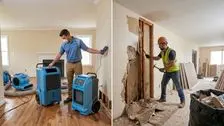

A burst supply line or an overflowing appliance leaves behind the same question in almost every Swisher home it touches: does this get dried out and repaired, or does it need to come out and be replaced? Getting that call wrong in either direction costs money, either through unnecessary demolition or through a repair that fails months later because the material was never truly salvageable.
This guide breaks down how the restoration versus replacement decision actually gets made after water damage, material by material, so Swisher homeowners know what questions to ask before work begins.
What Determines Whether Something Can Be Restored or Needs Replacement
A few factors drive this decision more than anything else:
- The type of material affected, since porous materials like drywall and carpet padding hold water differently than solid wood or tile
- The category of water involved, since clean water allows more materials to be dried and saved than gray or contaminated water
- How long the material sat wet before drying began, since 24 to 48 hours is often the point where mold risk and structural weakening increase sharply
- Whether the damage reaches structural elements like subfloor or framing, which changes both the cost and the safety calculation
When Restoration Is the Right Choice
Restoration tends to work well when the water is clean, the affected area is dried quickly, and the material itself is not overly porous. Solid hardwood floors, for example, can often be dried, sanded, and refinished rather than torn out, provided cupping or warping is not severe. Drywall that got wet from a short-term leak and dried within a day or two frequently only needs the affected section cut out and patched rather than a full room replacement.
When Replacement Makes More Sense
Replacement becomes the better option once a material has been wet for an extended period, was exposed to contaminated water, or has already started to show mold growth, warping, or delamination. Carpet padding almost always falls into this category after any significant flooding, since it holds moisture in a way that is difficult to fully dry. A subfloor that has swelled or become soft underfoot is a similar case. In these situations, restoration would mean putting new finishes over a compromised base, which tends to cause problems again later.
Flooring: Restore or Replace After Water Damage?
Different flooring materials respond very differently to water exposure:
- Solid hardwood can sometimes be dried and refinished if caught early and not severely cupped or warped
- Engineered hardwood is more sensitive to moisture and often needs replacement once the core layers have absorbed water
- Carpet can occasionally be saved if the water was clean and extraction happened quickly, but the padding underneath usually needs to be replaced
- Vinyl and laminate flooring typically need replacement once water gets underneath, since the material itself does not dry from below
- Tile usually survives water exposure well, though the subfloor or grout beneath it may still need attention
Drywall and Insulation: Restore or Replace?
Drywall that was only lightly affected and dried quickly can sometimes be saved, but drywall that stayed wet for more than a day, shows visible sagging, or was exposed to contaminated water typically needs to be cut out and replaced. Insulation behind drywall is almost always a replacement rather than a drying situation, since wet insulation loses its effectiveness and is difficult to dry thoroughly once soaked.
Cabinets and Countertops: Restore or Replace?
Kitchen and bathroom cabinets present their own version of this decision. Solid wood cabinet boxes that were only briefly exposed to clean water can sometimes be dried and refinished, particularly the upper cabinets that rarely take on water directly. Base cabinets sitting in standing water for any length of time are a different story, since particleboard and MDF construction, common in many cabinet lines, swells and loses structural integrity once saturated and rarely returns to its original shape once dry. Countertops themselves are usually fine, but the cabinet base supporting them needs its own separate evaluation.
Cost Considerations Beyond the Initial Estimate
The upfront cost of restoration is almost always lower than replacement, which is part of why it is worth pursuing whenever the material genuinely supports it. But an incomplete drying job followed by mold growth or a failed repair months later usually costs more in total than replacing the material correctly the first time. Weighing the moisture readings and the material’s condition against the repair estimate, rather than defaulting to whichever option looks cheaper on paper, tends to produce the better long-term outcome for a Swisher home.
How We Help Swisher Homeowners Decide
When we assess water damage in a Swisher home, we check moisture levels in the affected materials rather than relying on how things look on the surface, since a floor or wall can appear dry while still holding moisture underneath. That reading, combined with how long the area was wet and what type of water was involved, is what shapes our recommendation on what can realistically be restored.
We walk homeowners through the reasoning behind each recommendation, including the tradeoffs, so the decision does not come down to guesswork.
Frequently Asked Questions
How Do I Know If My Hardwood Floor Can Be Saved After Water Damage?
A hardwood floor is often salvageable if it was exposed to clean water, dried within the first day or two, and does not show severe cupping or gaps between boards. Floors that have been wet for several days or show extensive warping usually need to be replaced.
Is It Cheaper to Restore or Replace Water-Damaged Drywall?
Restoring a small, lightly affected section of drywall is usually less expensive than a full replacement, but the cost comparison flips once the damage covers a larger area or involves contaminated water, since cutting out and replacing damaged sections at that point is often faster and more reliable.
Can Carpet Padding Ever Be Dried Instead of Replaced?
Carpet padding can sometimes be dried in place after a very minor, clean-water spill caught within a few hours, but it rarely holds up after any significant flooding. Padding absorbs and retains water more than almost any other common building material.
Does Homeowners Insurance Cover Replacement or Only Repair?
Coverage depends on the specific policy and the cause of the water damage, but many policies cover the cost of replacement when a professional assessment determines that repair or restoration is not a viable option. Documentation showing why replacement was necessary typically supports that part of the claim.
How Long Does a Restoration vs. Replacement Decision Usually Taken?
An initial assessment can often be made within the first inspection, though moisture readings over the following day or two sometimes confirm or change that initial call, particularly for materials like subfloor that can look dry on the surface while still holding moisture.
Final Thoughts on Restoration vs. Replacement
The restoration versus replacement decision after water damage comes down to the water category, how long materials stayed wet, and what type of material was affected. Solid materials caught early often can be saved, while porous materials exposed to contaminated water or long-term moisture usually cannot.
If your Swisher home has recent water damage and you are trying to figure out what can be restored, our team at Brown’s Floor Care & Restoration can assess the affected materials, check moisture levels beneath the surface, and give you a clear recommendation before any work begins.